Product data quality should be measured against the next business action. A record may be good enough for internal discovery but not ready for a customer quotation, ERP import, or channel publication. Distributors need clear gates instead of one vague “complete” status.
Use this checklist when reviewing product records created from supplier catalogs, price sheets, specifications, and image folders.
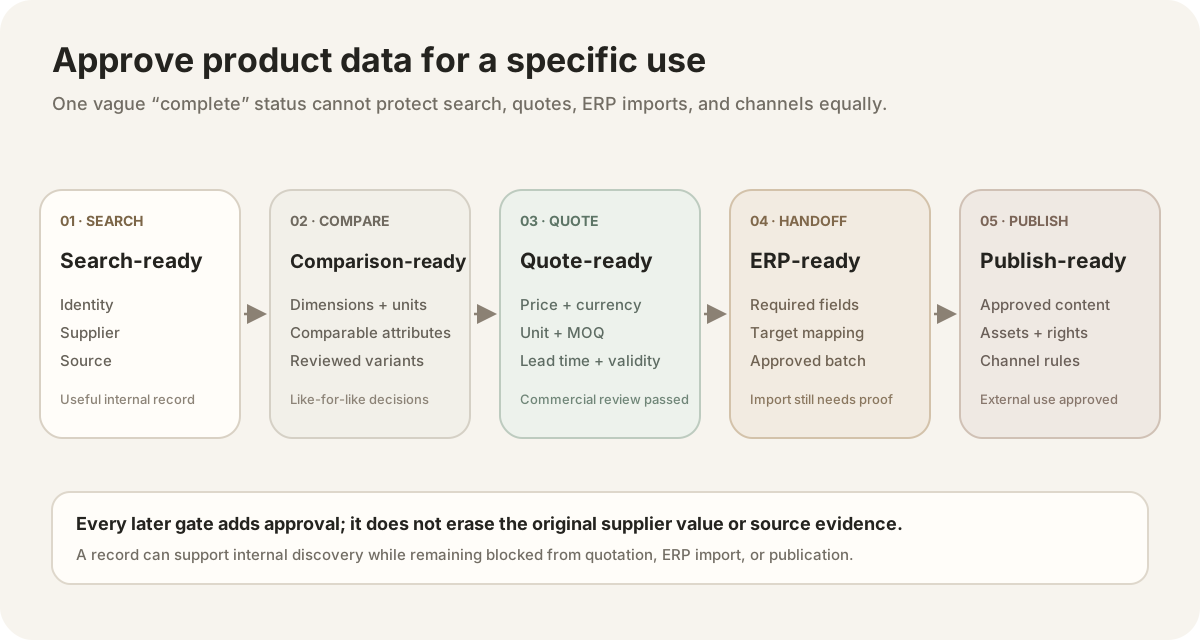
A product record earns approval for a specific use. Passing an internal-search gate does not make it ready for ERP import or channel publication.

Editorial illustration — a visual explanation of product data quality gates, not a real customer record or product interface.
1. Supplier and Source Identity
- The supplier has a stable identity and is not duplicated under spelling variations.
- The source file, received date, and intake batch are recorded.
- The source page, spreadsheet row, or image filename can be located.
- A later quotation does not erase the earlier source and effective date.
- Supplier-provided values are distinguishable from normalized or calculated values.
Without source identity, a reviewer cannot resolve conflicting prices or confirm which supplier offered the product.
2. Product Identity and SKU
- The original supplier SKU or model is preserved exactly.
- The product has a clear internal record identifier.
- Product, variant, accessory, set, and packaging option are not confused.
- A duplicate SKU has been investigated before records are merged.
- Previous supplier codes remain available when a model is renamed.
- The product name describes the item rather than only the catalog section.
Product identity is the foundation. Cleaning attributes on the wrong product only makes the error harder to notice.
3. Category, Attributes, and Dimensions
- Category and subcategory use the company's controlled vocabulary.
- Dimensions are separated into fields such as width, depth, height, and seat height.
- Every measurement has a unit and a clear meaning.
- Original dimensions remain visible after unit normalization.
- Material, finish, color, style, and composition are not mixed into one field.
- Category-specific requirements such as packing volume, fire rating, or set count are captured when relevant.
Do not infer a missing certification, material, or dimension from a similar product. Mark the field missing and route it for confirmation.
4. Images and Variants
- The primary image belongs to the product or is explicitly marked as a family image.
- Variant images are connected to the correct color, finish, or size.
- Lifestyle images do not imply that accessories are included.
- Image filenames and source pages are retained.
- Duplicate images do not create duplicate product records.
- Missing or uncertain image assignments enter a review queue.
An image error can be more damaging to a quotation than a missing description because customers often make the first decision visually.
5. Price, Currency, Unit, and MOQ
- Price has a currency.
- The unit basis is clear: piece, set, carton, square meter, or another unit.
- MOQ refers to the correct product, variant, and unit.
- Price breaks and quantity tiers are represented without overwriting the base price.
- Incoterm, market, tax, or freight context is stored when supplied.
- Quotation date and validity period are present.
- Calculated margin or converted currency is labeled separately from the supplier quote.
A number alone is not a usable price. Currency and unit basis are required to compare suppliers correctly.
6. Lead Time and Availability
- Lead time distinguishes production, sample, customization, and transit when the source does.
- The time unit is explicit: days or weeks, calendar or working days.
- Stock availability is not treated as a permanent product attribute.
- Customization requirements and their lead-time impact are recorded.
- The source and confirmation date remain visible.
Lead time ages quickly. Treat it as time-sensitive commercial information rather than a static catalog description.
7. Search and Sales Usefulness
- Sales can find the product using common customer language, not only the supplier's name.
- Key filters such as category, dimensions, style, material, price range, and supplier work.
- Similar products are distinguishable by the fields that matter to the customer.
- Search results show source and review status.
- The record can be added to a shortlist without copying details from the original file again.
Ask sales to test real requests. A technically complete schema can still be useless if the fields do not match how customers describe products.
8. Readiness Decision
| Status | Required quality gate |
|---|---|
| Search-ready | Product identity, supplier, source, and useful descriptive fields are present |
| Comparison-ready | Comparable attributes, dimensions, units, and commercial fields are reviewed |
| Quote-ready | Price, currency, unit, MOQ, lead time, and validity are confirmed |
| ERP-ready | Required fields pass mapping and format validation |
| Ready to publish | Approved descriptions, taxonomy, assets, rights, and channel requirements are complete |
Do not use “approved” without saying approved for what. A record that is ready for internal search may still be blocked from quotation or publication.
9. Ownership and Exception Handling
- Each exception has a reason, owner, and next action.
- Sourcing owns supplier identity and commercial confirmation.
- Product or category owners resolve classification and variants.
- Sales reports search fields that do not support customer requests.
- Operations or IT approves PIM and ERP mappings.
- Rejected values keep an audit trail instead of disappearing.
Review effort should focus on high-impact exceptions, not on re-reading every extracted cell.
Put the Checklist Into the Workflow
Apply automated validation to required fields, formats, units, dates, and obvious duplicates. Route identity conflicts, uncertain images, and commercial exceptions to the correct human reviewer. Publish records only to the readiness level they have earned.
Use the furniture product master data guide to define which checks belong to the product, variant, supplier offer, asset, or source-evidence record.
The furniture product information management guide helps assign each gate to the upstream review workspace, PIM, ERP, or channel owner.
Skulinker keeps supplier product records connected to their source, supports review and normalization, and lets sales search the approved catalog while unresolved fields remain visible to sourcing.
Next step
Give every product record a use-specific quality gate
Keep search-ready, comparison-ready, quote-ready, ERP-ready and publish-ready decisions explicit instead of using one vague status.
Continue reading